

Openness, technology, and high art: the recap of the United Cultures Forum
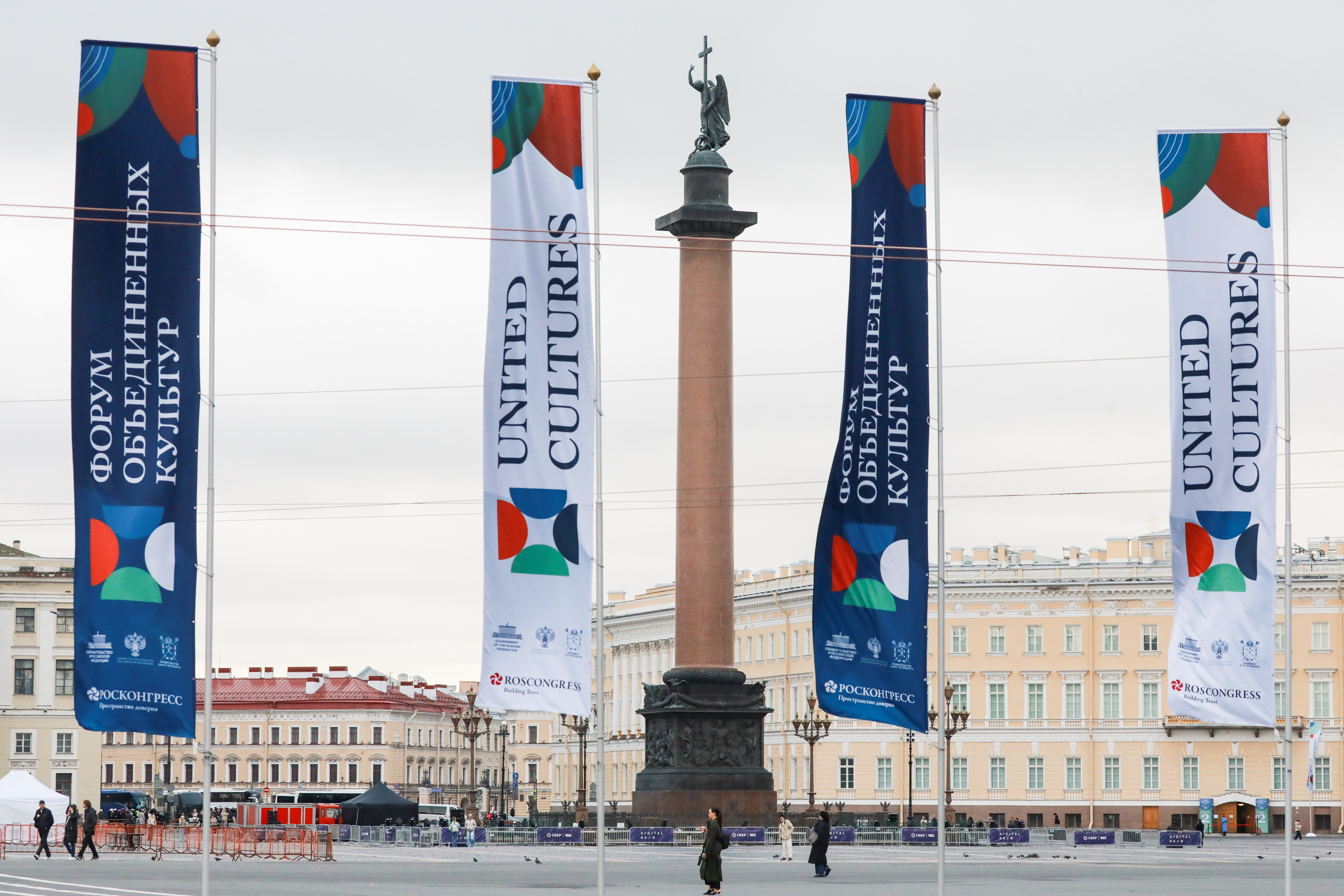
The 12th St. Petersburg International United Cultures Forum concluded in St. Petersburg on 26 September. Over three days, its venues became spaces for discussing how to preserve cultural identity while remaining open to the world, develop international cultural ties, and combine tradition with new technologies. The Forum’s central theme, “United Cultures, Common Values”, ran through both its business and cultural programmes, finding practical expression in tangible proposals put forward by participants.
The 12th St. Petersburg International United Cultures Forum concluded in St. Petersburg on 26 September. Over three days, its venues became spaces for discussing how to preserve cultural identity while remaining open to the world, develop international cultural ties, and combine tradition with new technologies. The Forum’s central theme, “United Cultures, Common Values”, ran through both its business and cultural programmes, finding practical expression in tangible proposals put forward by participants.
The central event of the Forum was an address by President of the Russian Federation Vladimir Putin. The Head of State emphasized the unifying role of culture, its ability to preserve ties between people and nations, and its capacity to overcome the differences between them.
“Our country has historically developed as a space for interaction among peoples, languages and customs. For us, unity is not uniformity but cohesion, built on the careful and distinctive development of every people and every ethnic group. Culture plays a key role in this process – as it does in our complex world, with its conflicts, profound technological and social transformations and competition between countries. Crucially, culture is capable of building bridges between people despite any differences; it serves as a vital and indispensable means of communication and dialogue where political and economic ties are frozen or brought to a standstill by various disagreements, sanctions and restrictions,” said Vladimir Putin.
More than 4,500 people from over 70 countries took part in the Forum as participants or media representatives. Forty-three official foreign delegations came to St. Petersburg, 18 of them headed by ministers of culture. The main and youth programmes brought together representatives of cultural institutions, government authorities, professional associations, the creative community, and international organizations.
One of the Forum’s substantive outcomes was the Summary of the Chair of the Organizing Committee, compiled from the proposals and conclusions put forward during the discussions. The document addresses the preservation of cultural diversity and heritage, the development of international cultural exchange and creative education, the responsible use of artificial intelligence, and the preservation of cultural sovereignty. Participants also affirmed the importance of engagement between equals and humanitarian cooperation free from artificial or politicized barriers.
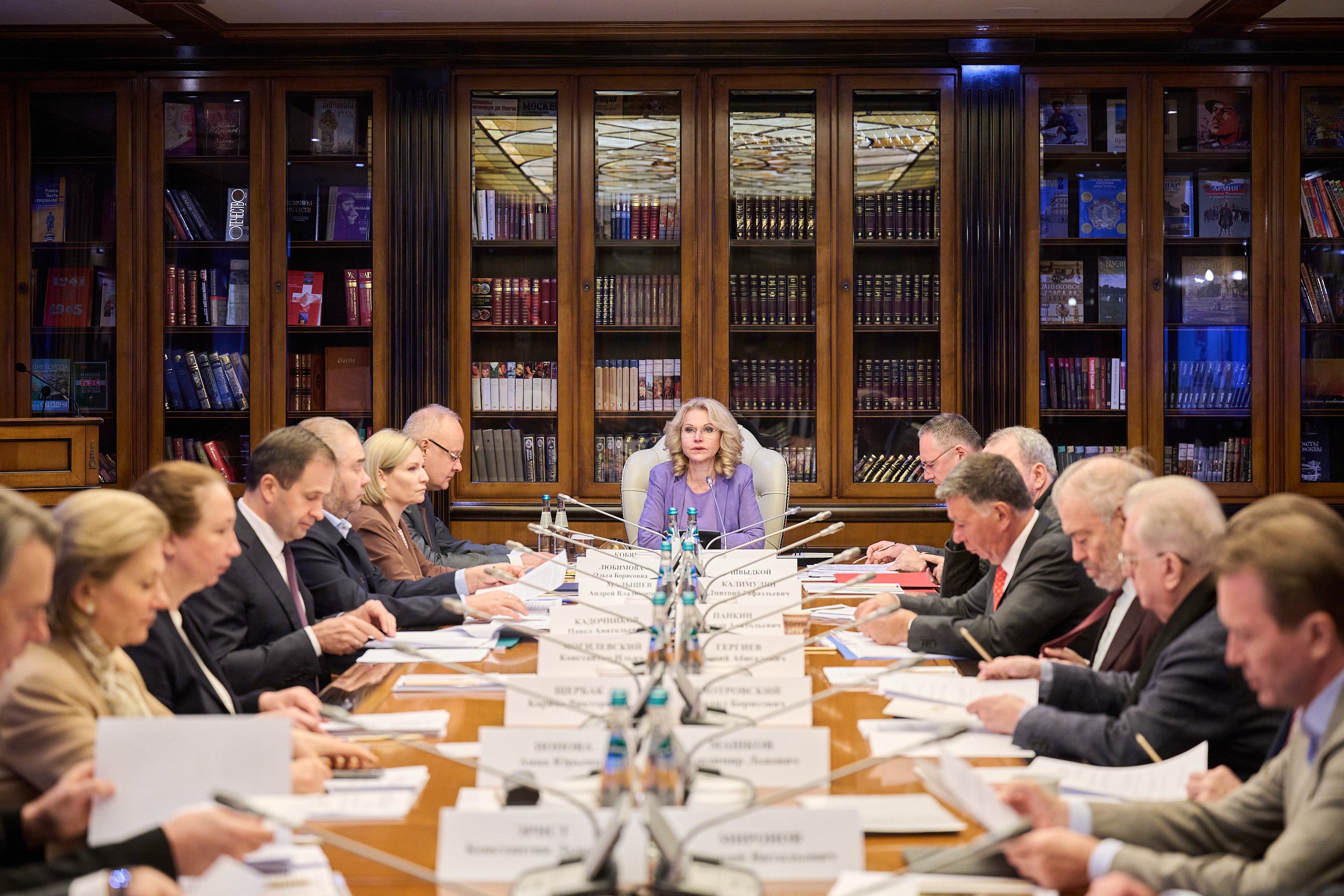
“When we were preparing the Forum, we set ourselves the task of ensuring that the ideas generated through professional discussion would find their continuation in tangible solutions. Today we can see that this dialogue took place and made it possible to develop common approaches to a whole range of issues of concern to the cultural community in different countries. It matters to us that this joint work should continue after the Forum has closed, so that the proposals voiced here are put into practice. We are uniting our cultures, and culture unites us,” noted Tatyana Golikova, Deputy Prime Minister of the Government of the Russian Federation and Chair of the Forum’s Organizing Committee.
The Forum’s business programme comprised 84 events across ten thematic areas. At the closing session, the curators of the sections presented the main conclusions and proposals arising from three days of professional discussion.
“It is fundamentally important for the Forum that professional discussion should continue beyond its venues. This year, the focus was on questions of cultural identity, education, international exchange and new technologies. Preserving and developing the country’s cultural code is one of the key tasks, and it is through that code that the Soul of Russia is revealed, along with its values, distinctiveness and connection between generations. Yet caring for one’s own culture does not mean closing oneself off from the world. On the contrary, understanding one’s own cultural code creates a firm basis for dialogue between equals, new professional connections and joint international projects,” noted Anton Kobyakov, Adviser to the President of the Russian Federation and Executive Secretary of the Forum’s Organizing Committee.
In the museum section, one of the central questions was the development of a long-term strategy for museums. As Mikhail Piotrovsky, Director General of the State Hermitage Museum, observed, a museum today serves not only as a custodian of its collections, but also as a space where historical memory and the cultural code of a nation are preserved. Among the practical matters discussed were restoration, heritage preservation and the ownership of cultural property.
Participants linked the development of theatre to wider international professional exchange, joint productions and educational projects. Vladimir Mashkov, Chairman of the Union of Theatre Workers of the Russian Federation, outlined work on a concept for the development of theatre through to 2035, as well as growing cooperation with professional associations in Vietnam, the Arab countries, and Iran. Evgeny Mironov, Artistic Director of the State Theatre of Nations, highlighted the festival movement as an instrument of direct cultural exchange between countries, including prospects for developing ties with the states of Latin America. Valery Fokin, President of the Alexandrinsky Theatre, also took part in this track.
In the film industry, discussion focused on international co-production, the development of digital platforms, the economics of the sector, genre diversity and the use of artificial intelligence. Summing up the section’s work, Konstantin Ernst, Director General of Channel One, emphasized the fundamental role of authorial choice and human responsibility even as new technologies become increasingly widespread.
Questions of cultural sovereignty were explored through discussions of the balance between national identity and openness to international engagement. Konstantin Mogilevsky, Deputy Minister of Science and Higher Education of the Russian Federation, noted that cultural sovereignty does not mean isolation, and that preserving one’s own identity creates the basis for dialogue between equals with other cultures. Among the proposals put forward was the development of Russian artificial intelligence systems drawing on Russian library, archive and cultural collections, with the final decision remaining with the individual.
In the music track, curated by Olga Khomova, Director General of the St. Petersburg State Academic Capella, and Alexey Shalashov, Director General of the Moscow State Academic Philharmonia, the key themes were developing tomorrow’s audiences, international competitions and support for regional orchestras.
On creative education, Semyon Mikhailovsky, Rector of the Repin St. Petersburg Academy of Arts, drew attention to the need to preserve the high standards of the Russian creative school and its humanistic foundation amid technological change. Summing up the strand devoted to cultural heritage, Yulia Kupina, Director of the Russian Museum of Ethnography, highlighted its significance as a record of the past, as well as a resource for contemporary development and dialogue between generations.
In discussions on artificial intelligence, Roman Karmanov, Director General of the Presidential Fund for Cultural Initiatives, presented an approach to AI primarily as a tool intended to help people and to be used with due regard for the need to preserve cultural heritage and the cultural code. In the circus section, Edgard Zapashny, Director General of the Bolshoi Moscow State Circus, emphasised the unique value of live human mastery, while in the Media Culture section Andrey Kondrashov, Director General of TASS, spoke about the role of the family and education, as well as the images created by the media, in shaping a society’s cultural bearings.
“Our Forum has once again confirmed its standing as an authoritative venue for the most open and free dialogue, where representatives of different countries, peoples and cultures come together for a common purpose: to identify the challenges facing world culture and develop the solutions needed to address them.
We are grateful to all our colleagues for taking part, for the substantive and engaging discussions, and for raising questions that were at times difficult but very important. All the initiatives, agreements reached and plans outlined will very soon be transformed into a great many striking projects that will showcase the full palette of our cultures, united by common and genuine values,” noted Olga Lyubimova, Minister of Culture of the Russian Federation.
The Forum continued beyond its main venue. St. Petersburg’s regional programme brought together 26 events in the city’s museums, theatres, educational establishments and other cultural institutions. For the first time, broadcasts of programme events taking place at the Forum’s venues were organized in the General Staff Building of the State Hermitage Museum, allowing participants to follow the key discussions from its central space.
The cultural programme held a special place this year. The St. Petersburg Seasons Festival of Culture, held annually by the Administration of St. Petersburg together with the Roscongress Foundation, brought together more than 120 events, continuing the professional dialogue through the language of art.
The St. Petersburg Seasons programme included the exhibition “The Great: The Image of Woman in Russian Art” at the State Russian Museum, the opening of the season at the Shostakovich St. Petersburg Academic Philharmonia, marking 120 years since the composer’s birth, as well as theatre productions, concerts, and museum and exhibition projects.
One of the central events was a performance by the Alicia Alonso National Ballet of Cuba of the Gran Teatro de La Habana. The company came to Russia for the first time since 2011 and performed “Giselle” on the historic stage of the Mariinsky Theatre.
The Forum’s final day continued this theme at the State Hermitage Museum. The Hermitage Prize award ceremony was held in the St. George Hall of the Winter Palace. Its 2026 laureates were Mikhail Shvydkoy and Italian theatre director Giancarlo del Monaco. The same day saw the opening of the exhibition “A Message of Peace and Friendship: Appiani’s Portrait of Joséphine de Beauharnais from the Collection of Duchess Oliva Salviati”. Duchess Maria Oliva Salviati presented the wedding portrait of Joséphine de Beauharnais from her personal collection to the State Hermitage Museum as a symbol of peace, friendship and dialogue between the peoples of Russia and Italy.
In 2026, the Roscongress Foundation organized the St. Petersburg International United Cultures Forum for the first time. As Alexander Stuglev, CEO of the Roscongress Foundation, noted, particular attention was given in preparing the Forum to bringing the business and cultural programmes together, as well as incorporating St. Petersburg’s leading cultural venues into its architecture. Representatives of the foreign delegations also remarked on the high standard of organisation.
Among the international participants were Malika Bendouda, Minister of Culture and Arts of Algeria; Abbas Salehi, Minister of Culture and Islamic Guidance of Iran; Arman Kyrykbaev, Minister of Culture and Information of Kazakhstan; Jean-Claude Gakosso, Minister of Culture, Arts, National Heritage and the Tourism Industry of the Republic of the Congo; Ogascar Fenosoa Mandrindrarivony, Minister of Communication and Culture of Madagascar; Tiong King Sing, Minister of Tourism, Arts and Culture of Malaysia; Maung Myint, Union Minister of Hotels, Tourism and Culture of Myanmar; Grigory Mamiev, Minister of Culture of the Republic of South Ossetia; Abdifatah Qasim Mohamud, Minister of Information, Culture and Tourism of Somalia; and Gina Lawson Roussalem, Minister of Arts, Culture and Tourism of the Central African Republic.
Maung Myint, Union Minister of Hotels, Tourism and Culture of Myanmar, drew attention to the need for international engagement amid the rapid development of artificial intelligence and digital media.
“Technology should remain a means and serve people. It is precisely at venues such as the United Cultures Forum that a shared understanding of responsibility for cultural content and heritage takes shape. No country can address the complex challenges of preserving cultural heritage alone. This calls for global international dialogue, joint projects and new platforms for cooperation,” he noted.
Abbas Salehi, Minister of Culture and Islamic Guidance of Iran, spoke of the Forum’s practical significance for developing bilateral cooperation between Russia and Iran.
“Forums of this kind provide an opportunity to exchange views that can then develop into concrete joint projects and strengthen cultural cooperation. An important event is taking place at the Forum: the signing of an agreement on joint film production between the Islamic Republic of Iran and the Russian Federation. Our countries have considerable potential for jointly producing and distributing feature films, animation and documentaries, including projects for children and young people,” he noted.
Thirty-three agreements were signed at the Forum, covering cooperation in culture, museums and theatre, education, and the preservation of cultural heritage. One area of cooperation was wider engagement between leading art institutions and the promotion of the Russian academic school. The State Russian Museum and the Repin St. Petersburg Academy of Arts agreed a strategic partnership aimed at preserving, studying and promoting the traditions of Russian academic painting. The Academy also concluded agreements with the Alupka Palace and Park Museum-Reserve and the Novosibirsk State Art Museum.
Imad al-Din Hamdan, Minister of Culture of Palestine, noted that the Forum makes it possible to turn agreements on cultural cooperation into concrete joint initiatives.
“At venues like this, agreements on cultural exchange are carried forward and become regular programmes and joint initiatives. That might be a weekly programme in Palestine devoted to Russian culture and, in turn, a weekly programme on official television in Russia devoted to Palestinian culture,” he noted.
Expert and analytical support for the Forum is provided through an enhanced version of the Summary intelligent service, which has been successfully used at the largest business events. The service is delivered by Roscongress Foundation analysts, drawing on many years of experience and the possibilities offered by continuous digital transformation. Its technological foundation is the patented InForum AI technology, the Foundation’s own development in the field of artificial intelligence.
As part of the upgrade, the generation of brief summaries of discussions has been automated: the system identifies key conclusions, problems and proposed solutions. It also makes it possible to create visual “clouds of meaning” in real time and select speakers’ principal quotations. This increases the speed and accuracy of the analysis, reduces the manual workload and provides substantive support for the Forum at every stage.
Following the Forum, the proposals and initiatives voiced during the discussions will be brought together and closing materials prepared for further work. The main concluding analytical document will be the report entitled “Recap of the 12th St. Petersburg International United Cultures Forum”. An electronic version of the study will be available to download from the Roscongress Foundation’s Information and Analytical System.
The Forum was organized by the Roscongress Foundation with the support of the Government of the Russian Federation, the Ministry of Culture of the Russian Federation and the Government of St. Petersburg.
PSB Bank was the Forum’s organizing partner, and HONGQI was the Official Car. The Forum was supported by the State Hermitage Museum, Channel One, the Union of Theatre Workers of the Russian Federation, the Bolshoi Moscow Circus, the St. Petersburg State Academic Capella, Mariinsky II, the Meganom Academy of Creative Industries (a project of the Tavrida art cluster), the Ministry of Science and Higher Education of the Russian Federation, the Presidential Fund for Cultural Initiatives, the Russian Historical Society, the Repin St. Petersburg Academy of Arts, the Russian Museum of Ethnography, the Union of Museums of Russia, TASS and the State Theatre of Nations.
All news